What Are the Warning Signs Of Payment Fraud in 2026?
Best Payment Signs in 2026
We researched and compared the top options so you don't have to. Here are our picks.
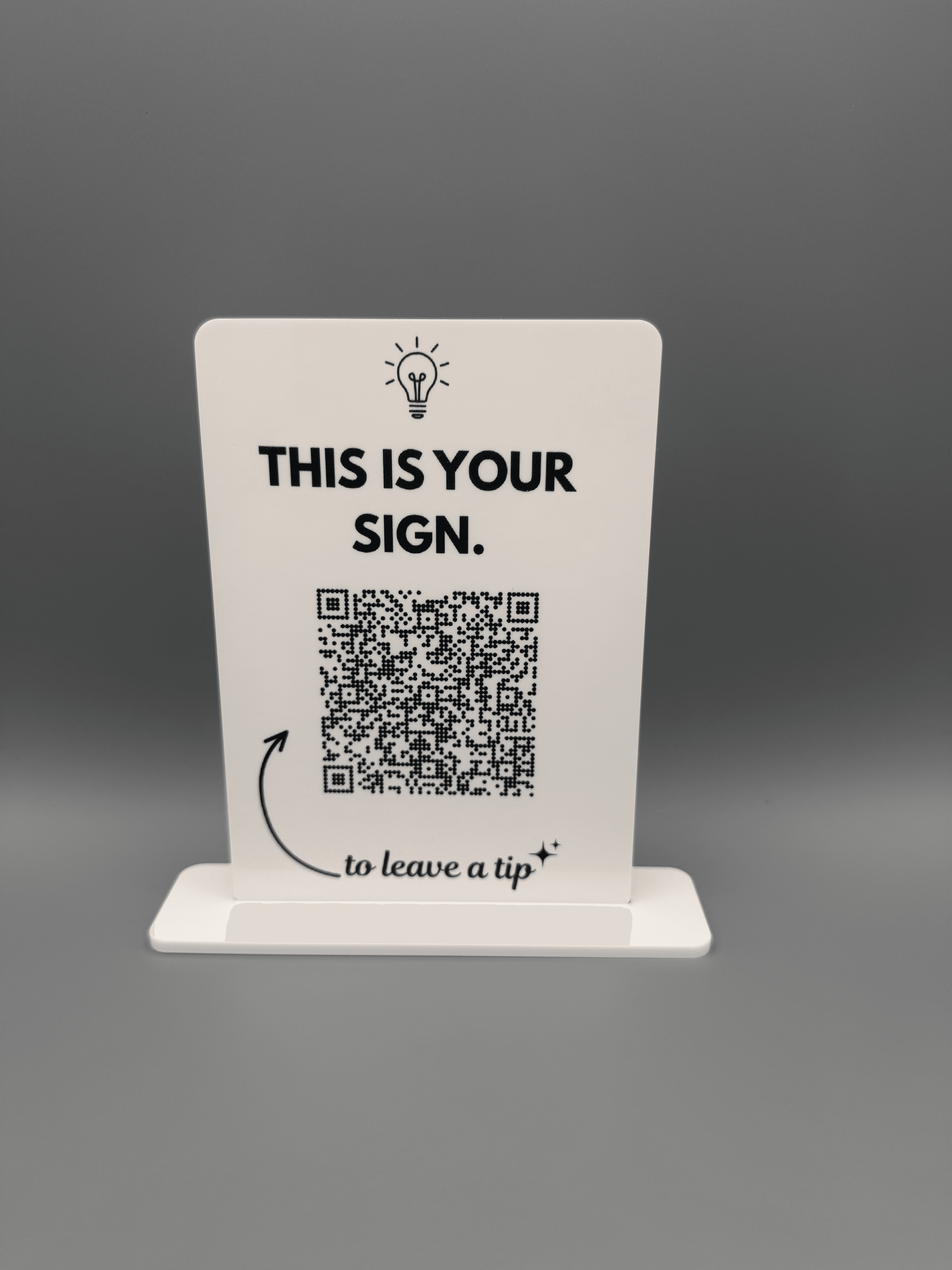
1. Personalized Acrylic QR Code Tip Sign with Stand
by Sign
- Sure! Please provide the product features you would like me to focus on.
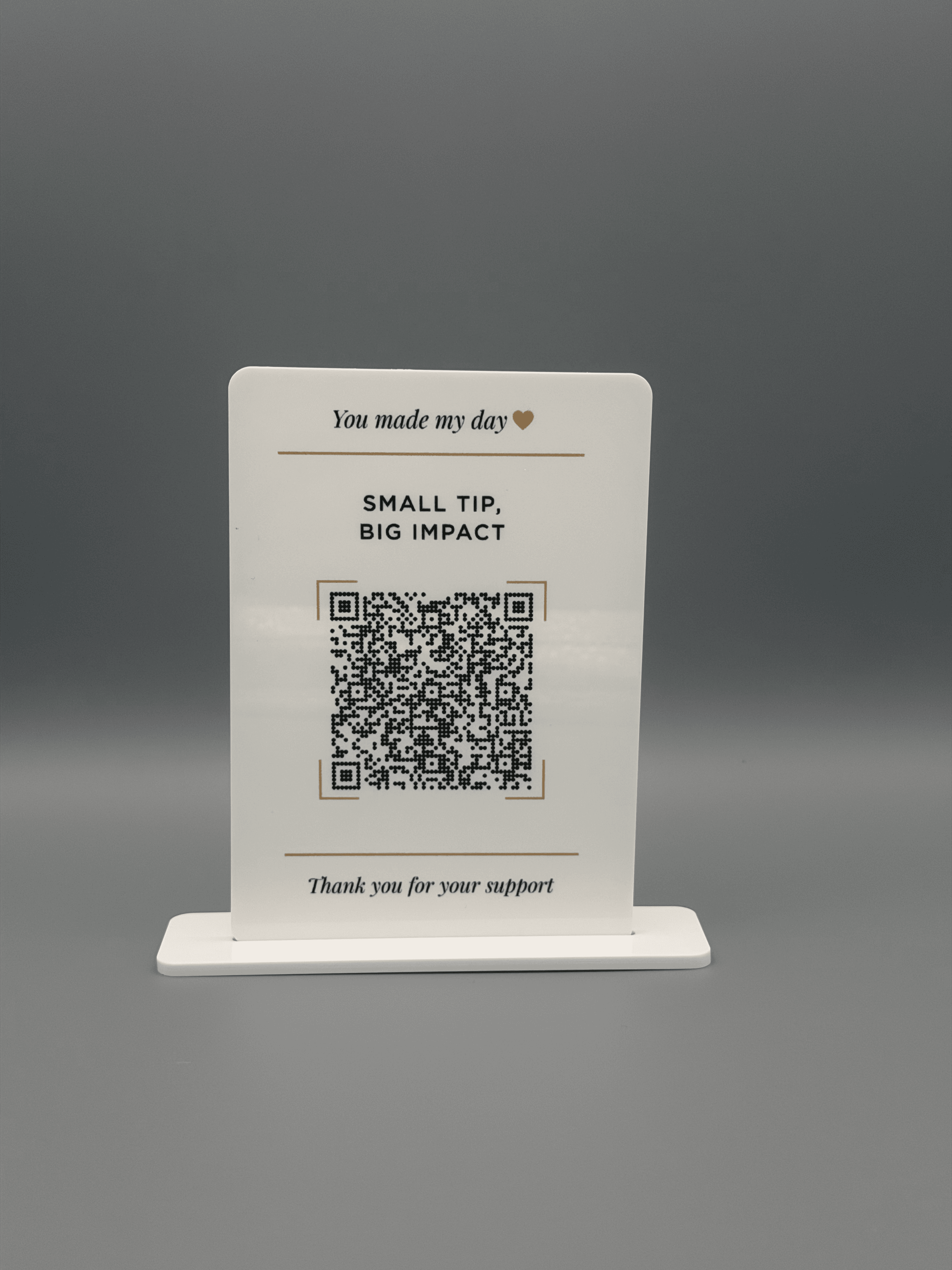
2. Custom QR Code Acrylic Tip Sign with Stand
by Sign
- Sure! Please provide the product features you'd like me to create highlights for.
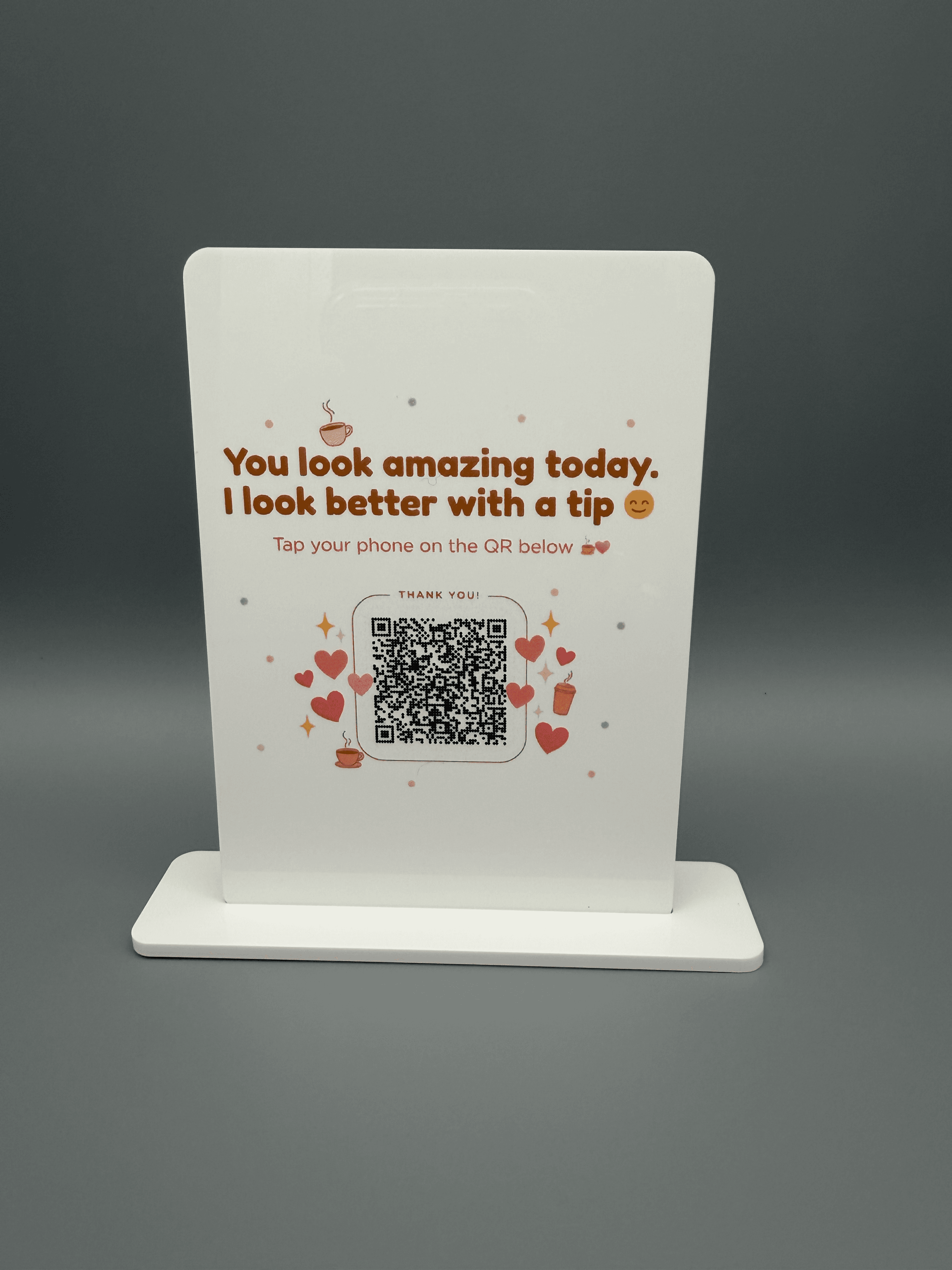
3. Custom QR Code Tip Sign Acrylic Stand for Coffee Shops
by Sign
- Sure, please provide the product features you'd like me to highlight, and I'll create the list for you!

4. NFC Keychain 3D Printed Venmo Tap to Pay
by Keychain
- Sure! Please provide the product features you’d like me to use for crafting the highlights.

5. We Accept Credit Card, Mobile Payment & Contactless Pay Service POS Cashier Sign Waterproof Stickers Compatible for Visa, MasterCard, Discover, AmEx, (Apple Pay Compatible)
by Tagsignlogy
- UV Matte Laminate ensures clear visibility in bright environments.
- % weather, tear, and scratch-resistant for lasting outdoor durability.
- Easy peel design for quick application on flat or slightly curved surfaces.
What Are the Warning Signs of Payment Fraud in 2026? Start with this: payment fraud losses worldwide are projected in the tens of billions annually, and the sharpest growth is coming from real-time payments, account takeover, synthetic identity fraud, and AI-assisted social engineering. The scams look cleaner now, faster, and more believable than they did even 24 months ago.
I’ve spent enough time reviewing fraud patterns, checkout failure logs, chargeback disputes, and merchant risk workflows to know one thing: the biggest losses rarely start with a dramatic breach. They start with a small signal you almost ignored — a billing ZIP mismatch, a sudden device change, a rush order to a reshipper, or a customer insisting on bypassing normal verification.
If you’re trying to spot payment fraud early, this guide gives you the practical warning signs, the review criteria that actually matter, and the tools or controls worth paying for in 2026.
How we evaluate fraud-prevention options: We review fraud signals, chargeback patterns, authentication flows, dispute data, user friction rates, and buyer feedback from merchants and finance teams. We prioritize solutions and practices that reduce false positives while catching high-risk transactions early, especially where approval rates, device intelligence, and identity verification intersect.
What Are the Warning Signs of Payment Fraud in 2026? The fastest red flags usually show up before the payment settles
The clearest fraud indicators in 2026 tend to cluster in the first 90 seconds of a transaction. That’s the window where stolen credentials, bot-driven checkout attempts, and manipulated payment flows reveal themselves through speed, inconsistency, and evasion.
Watch for these high-risk patterns:
- Cardholder name, billing address, and shipping details don’t line up
- Multiple declined attempts in under 5 minutes using slight variations of card data
- New device + new location + high-value purchase on an account with no prior history
- Email domains with random strings or inboxes created the same day
- Shipping to freight forwarders, lockers, or reshipping hubs
- A sudden jump in order size, often 2x to 5x above the account’s normal average
- Requests to disable 2FA or override verification
- Urgent language like “process now” or “I’m traveling, can’t verify”
A legitimate customer may trigger one of those signals. Fraudsters often trigger three or more at once.
Which transaction patterns most often reveal payment fraud in 2026?
Velocity is still one of the strongest predictors. If the same card, IP, device fingerprint, or email tries 4 to 10 transactions in a short burst, you’re often looking at card testing or scripted checkout abuse.
Another pattern I see repeatedly is low-value authorization followed by a high-value attempt. Fraudsters use a small transaction to check whether the card is active, then immediately try a larger payment once they get a pass.
There’s also the “clean account, dirty behavior” pattern. The account may be aged, the name may look normal, but the behavior changes sharply: new browser, new SIM, new shipping region, and a premium order with expedited delivery. That combination matters more than any single field.
If you want a broader sense of how payment workflows fail at checkout, some merchants also compare error-handling behavior and failed authorization loops using sources like https://wpcrux.com.
What Are the Warning Signs of Payment Fraud in 2026? Account takeover now looks more “human” than ever
Account takeover fraud has changed. In 2026, attackers don’t always brute-force accounts; they often arrive with leaked credentials, session cookies, or phishing-captured one-time codes, then behave just enough like the real user to avoid obvious blocks.
Here’s what stands out:
Sudden profile edits before checkout
A fraudster often changes password, phone number, recovery email, and shipping address within minutes. If a purchase follows right after, the risk spikes.
Login success from an unfamiliar environment
A returning customer usually has some continuity: same city, known device, similar checkout timing. A login from a new country or a residential proxy, followed by stored-card usage, deserves step-up authentication.
Loyalty balances or saved cards used unusually fast
Fraudsters love accounts with stored payment methods because they reduce friction. If reward points are drained, saved cards are used on a rush purchase, or gift balances disappear in one session, treat it as more than a customer service issue.
How can you tell if a customer is legitimate or using stolen payment details?
You’re looking for consistency across data points. Real buyers tend to have a believable pattern across identity, device, payment method, and delivery preferences. Fraudsters tend to have one polished layer covering several weak ones.
Use this 5-point check:
Identity consistency
Name, email, phone, and billing address should form a coherent profile. A mismatch between all four is much riskier than one typo.Order history alignment
If the average historical purchase is modest and the new order is 300% higher, review it manually.Device and browser reputation
Emulators, hidden device attributes, and privacy-masking setups are common in fraud rings.Payment behavior
Multiple cards on one account, especially if two fail and the third passes, is a classic stolen-card signal.Delivery logic
A buyer who pays with a local card but ships internationally, or insists on overnight delivery to a forwarding address, needs extra screening.
That same idea of checking payment behavior step by step also matters in consumer finance education. For example, some readers comparing card obligations and billing math look at resources like Dollaroverflow, though fraud screening requires much tighter real-time risk logic.
What Are the Warning Signs of Payment Fraud in 2026 for online businesses?
For merchants, finance teams, and platform operators, the most expensive fraud often comes from signals that were technically visible but operationally ignored.
Refund abuse disguised as customer support
A customer claims non-delivery, but tracking shows rerouting, signature completion, or address modification after shipment. In many cases, refund abuse overlaps with friendly fraud and chargeback fraud rather than true card theft.
Mismatched AVS and CVV combined with approval pressure
A single AVS mismatch isn’t always fatal. But if AVS fails, CVV fails, and the customer pressures support to “push it through,” you’re looking at a transaction that deserves a hard stop.
Too many orders from one subnet or device cluster
Fraud teams often miss how concentrated attack traffic is. Ten “different” customers can still resolve to the same behavioral fingerprint, making device intelligence far more useful than email review alone.
Repeated payment retries after soft declines
Fraud bots are persistent. If you see the same buyer cycling through cards, BIN ranges, or issuer responses in a short period, that’s not checkout confusion — it’s testing behavior.
For adjacent risk research and external reading trails, some analysts still reference scattered web sources such as read more here, but your internal transaction data will always be the stronger source.
Our selection criteria: what actually matters when evaluating fraud-prevention tools or services
If you’re considering a payment fraud solution, don’t buy based on vague promises about “AI detection.” Most tools sound similar in the sales demo. The difference appears in false positives, manual review workload, and chargeback reduction after 60 to 90 days.
Here’s the framework I use:
- Detection depth: Does it combine device fingerprinting, behavioral analytics, geolocation, identity checks, and velocity rules?
- Approval-rate impact: A weak system may reduce fraud but also block legitimate customers, killing conversion.
- Manual review controls: Look for queue scoring, case notes, and evidence trails for disputes.
- Chargeback reporting: You want transaction-level visibility, not just summary dashboards.
- Authentication flexibility: Risk-based 2FA or step-up verification should trigger only when needed.
- Integration speed: If setup takes months, smaller teams won’t keep rules updated.
- Support quality: Fraud changes fast; stale rule sets can become expensive within one quarter.
Minimum benchmark: any serious option should help you review risk signals in real time and clearly separate bot traffic, first-party misuse, chargeback fraud, and true unauthorized payments.
Best fraud-prevention options under a lean budget
Not every team needs an enterprise stack. If your monthly transaction volume is modest, focus on controls that catch the most common attacks without crushing checkout conversion.
Your best lower-cost priorities are:
- Address verification and CVV matching
- Velocity limits by card, IP, and device
- Basic device fingerprinting
- Risk-based order review queues
- Email and phone reputation checks
For smaller merchants, these controls often catch a large share of card testing and simple stolen-card attempts. In practice, even a basic velocity rule can reduce bot-driven retries by 50% or more during an active attack.
The mid-range sweet spot: tools that balance fraud detection and approval rates
This is where many growing businesses should look first. You want stronger fraud prevention, but you can’t afford a flood of false declines.
The most useful mid-tier capabilities include:
- Behavioral biometrics
- Consortium fraud data
- Adaptive authentication
- Synthetic identity screening
- Automated dispute evidence assembly
These features matter because 2026 fraud isn’t just about stolen cards. It’s about layered deception — clean devices with dirty intent, accounts warmed up over weeks, and social engineering designed to trigger manual overrides.
Premium fraud solutions over the basic stack: when advanced controls pay for themselves
If you process high-risk transactions, cross-border volume, digital goods, or rapid-fulfillment orders, advanced tooling often pays back quickly. A single prevented fraud burst can offset months of platform cost.
Look for:
- Real-time graph analysis to connect related identities
- Network-level bot mitigation
- Deep account takeover detection
- Link analysis across devices, emails, cards, and addresses
- Custom machine learning models trained on your own fraud outcomes
These are especially valuable if your fraud losses exceed the cost of one specialist headcount each year.
What should you look for before buying a payment fraud prevention tool in 2026?
Here are the specific criteria worth checking before you sign anything.
False positive rate below your current baseline
If a new tool lowers fraud by 20% but declines 8% more legitimate buyers, it may hurt revenue overall.Chargeback reduction within 60 to 90 days
Anything slower usually means weak tuning or poor onboarding.Rule customization at the transaction level
You need controls for order value, shipping type, region, device risk, and account age.Case management with exportable evidence
Dispute workflows matter. Screenshots, logs, and verification events should be easy to retrieve.Support for real-time payments and alternative payment methods
Fraud is shifting beyond cards into bank transfer scams, push payment fraud, and social-engineered payment requests.Clear visibility into account takeover events
A good system shows password resets, device changes, and profile edits alongside payment risk.Practical deployment time
If your team can’t launch and calibrate it in a few weeks, the value drops fast.
Pro tip: If a vendor won’t share how they measure approval lift, fraud catch rate, and false declines, treat that as a red flag. The strongest providers can usually show before-and-after results across at least one quarter.
Red flags to watch in reviews, demos, and real-world fraud claims
Fraud software reviews can be oddly misleading. A platform may have polished dashboards but weak enforcement, or a strong engine hidden behind clunky support and slow tuning cycles.
Here’s what experienced buyers watch for:
No explanation for why a transaction was blocked
Black-box scoring creates support pain and weakens dispute handling.Too many manual reviews for medium-risk orders
If your analysts are reviewing everything, the automation isn’t doing enough.No distinction between card fraud and friendly fraud
Those are different problems and need different controls.Inability to detect synthetic identities
Synthetic fraud often survives basic KYC because the profile looks plausible on paper.Poor support during active fraud spikes
A vendor that responds in 48 hours is not built for modern attack windows.
💡 Did you know? Merchants often discover fraud too late because chargebacks arrive weeks after authorization, while the behavioral clues appeared in the first checkout session. That’s why real-time risk scoring matters more than monthly reporting.
If you want to compare how consumer debt, repayment stress, and payment behavior intersect in adjacent financial contexts, you may also encounter resources like Stlplaces or everything about loan repayment alternatives, though those are separate from transaction fraud monitoring.
Why are authorized push payment scams and social engineering such big threats in 2026?
Because the customer often sends the money themselves.
That’s what makes authorized push payment fraud so dangerous. The payment can look “authorized” at the bank level even though it was triggered by impersonation, fake invoices, romance scams, or urgent business email compromise.
The warning signs are different from stolen-card fraud:
- A sudden request to change bank details
- Pressure to pay immediately before normal approval
- A message thread that shifts channels unexpectedly
- Slight changes in sender address or invoice formatting
- A recipient account with no prior payment history
This is one reason finance teams now pair payment controls with invoice verification workflows and callback procedures.
How do you investigate suspicious payments without annoying real customers?
The best fraud operations teams use graduated friction. You don’t treat every flagged order the same way.
A sensible approach looks like this:
- Low risk: approve automatically
- Medium risk: request one extra verification step
- High risk: hold for manual review
- Severe risk: block and monitor linked activity
If you jump straight to hard declines, you’ll raise false positives. If you ignore multi-signal risk, you’ll pay in chargebacks, refund abuse, and support cleanup.
For broader background reading on how scattered finance and web ecosystems discuss related payment topics, you’ll sometimes see links like www.google.co.za or even http://wordflicks.blogspot.com, but your own dispute logs and authentication telemetry are far more useful.
The single most important action to take
If you only do one thing after reading about What Are the Warning Signs of Payment Fraud in 2026?, build your process around multi-signal verification, not single red flags. One mismatch can be innocent; three linked anomalies — device change, address inconsistency, and rushed fulfillment — are where serious risk usually starts.
Frequently Asked Questions
what are the first signs of payment fraud most businesses miss?
The earliest signs are usually behavioral, not financial: repeated card attempts, sudden device changes, profile edits right before checkout, and overnight shipping to a new address. Many businesses miss them because the chargeback arrives later, long after the checkout clues disappeared from view.
how do i know if a payment was made with a stolen card?
Look for mismatched billing and shipping data, multiple failed attempts before one approval, and a transaction that doesn’t fit the account’s normal order size or location. A stolen-card purchase often shows urgency plus inconsistency across identity, device, and delivery details.
what are the warning signs of payment fraud in 2026 for bank transfers and instant payments?
For bank transfers and instant payments, the biggest red flags are sudden payee changes, pressure to skip approval steps, and messages that push you off your normal communication channel. These scams rely heavily on impersonation and social engineering rather than card theft.
is a payment fraud prevention tool worth paying for in 2026?
Yes, if you process enough transactions for fraud losses, false declines, or manual reviews to create measurable cost. The right tool should reduce chargebacks within 60 to 90 days and show a clear balance between fraud detection and approval rates.
can legitimate customers trigger payment fraud alerts by accident?
Absolutely — travel, a new phone, a large one-time purchase, or shipping a gift to a different address can all trigger risk rules. That’s why the best systems score multiple signals together instead of blocking a customer for one unusual detail.